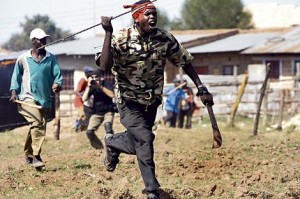
 The continuing political crisis in Kenya, as reported at The Independent among other places, continues to surprise some and disappoint many who have been to Kenya for business or pleasure. Having visited Kenya 12 times since 2004, to attempt to offer hope to refugees at the Kakuma Refugee Camp and to serve as a resource to leaders seeking a sustainable resolution to the, until late 2007, somewhat latent conflict in Kenya, I have been disappointed yet not surprised by the recent dispute between Kenya’s President and Prime Minister. This time the conflict appears to be over the authority of the Prime Minister to discipline Cabinet Ministers; this may be the symptom rather than the underlying problem. As with 2008’s post-election violence in Kenya and other episodes of conflict in the world today, a primary issue seems to be ineffective leadership.
In recent research for my doctoral dissertation, a leadership model emerged from the consensus among 375 leaders in Uganda’s Acholi sub-region that may apply to the Kenya context. Leaders, by what they say and do, and by what they do not say and do not do, define the beginning and end of conflict, the resolution of issues, and the reconciliation of interests and of individuals. Leaders divide people and reintegrate them.
Based on input from 375 leaders in Uganda, effective leaders suppress self interests in favor of community interests; when persons in leadership positions pursue self interests over community interests, members of the community may feel that the community is receiving ineffective leadership. Effective leaders pursue, develop, and provide culturally appropriate leadership training to help groom the next generation of leaders. To the extent that the same people seem to be recycled through positions of leadership and new people remain invisible or are not developed as the next generation of leaders, members of the community may question whether promises of new vision and change are empty slogans.
Leaders seeking a sustainable post-conflict heal broken relationships, guide define and guide needed change in their community, coordinate resolution of development issues and resource acquisition and allocation. Post-conflict leaders may become pre-conflict leaders if they pursue division and the opening of wounds. Leaders communicate a compelling vision to the community, model culturally appropriate behavior, and collaborate with other leaders within and outside the community. If the vision is not compelling or is poorly communicated, if the modeled behavior is culturally inappropriate, or if the would-be leader appears to isolate rather than collaborate, community members may suggest the would-be leader, or the people in positions of leadership, are not exhibiting leadership.
The more than 17 million refugees and internally displaced people in the world today, the conflicts in Uganda, Kenya, Nigeria, Sudan, Somalia, the Democratic Republic of the Congo, and elsewhere may indicate ineffective leadership. The world’s refugees and internally displaced, along with those of us fortunate to not be direct victims of the world’s conflicts, deserve effective leadership and people in positions of leadership who exhibit leadership. The context for leadership in regions transitioning from conflict to post-conflict is different from the context of most other types of organizations. An appropriate model for leading out of conflict may facilitate the recovery and rehabilitation in the world’s conflict zones. Will leaders choose to lead?
Elected leaders need to set aside their self-interests and lead the whole governmental unit, whether a nation, state, or district, and not meet only the needs of their party, people group, or clan. If historical, latent conflicts exist, resolve them rather than perpetuate or rekindle them. Where consensus exists, build on it; where consensus is lacking, either build consensus or seek compatible, parallel paths. Heal wounds and restore or, if possible, celebrate differences without creating an “us versus them” climate or dehumanizing “them” because of perceived differences. Create opportunities for all to advance rather than advantages for the few.
Above all, leaders should understand that would-be followers expect leaders, especially those in elected positions of leadership, to lead. A self-described leader who lacks followers may likely find that others do not consider the person a leader or their practices to represent effective leadership. Eventually, a person in a position of leadership who does not lead may find themselves removed from their position. The history of coups, revolutions, and elections in Africa and elsewhere should provide sufficient evidence that eventually people expect their leaders to lead them.
